Surreal Dystopian TV-Head Figures Prompt
A cinematic wide shot prompt depicting surreal dystopian figures with vintage television heads walking through a wet, foggy concrete expanse. The scene uses teal fog, dramatic lighting, and bright static screens to create a haunting, media-consumed atmosphere.
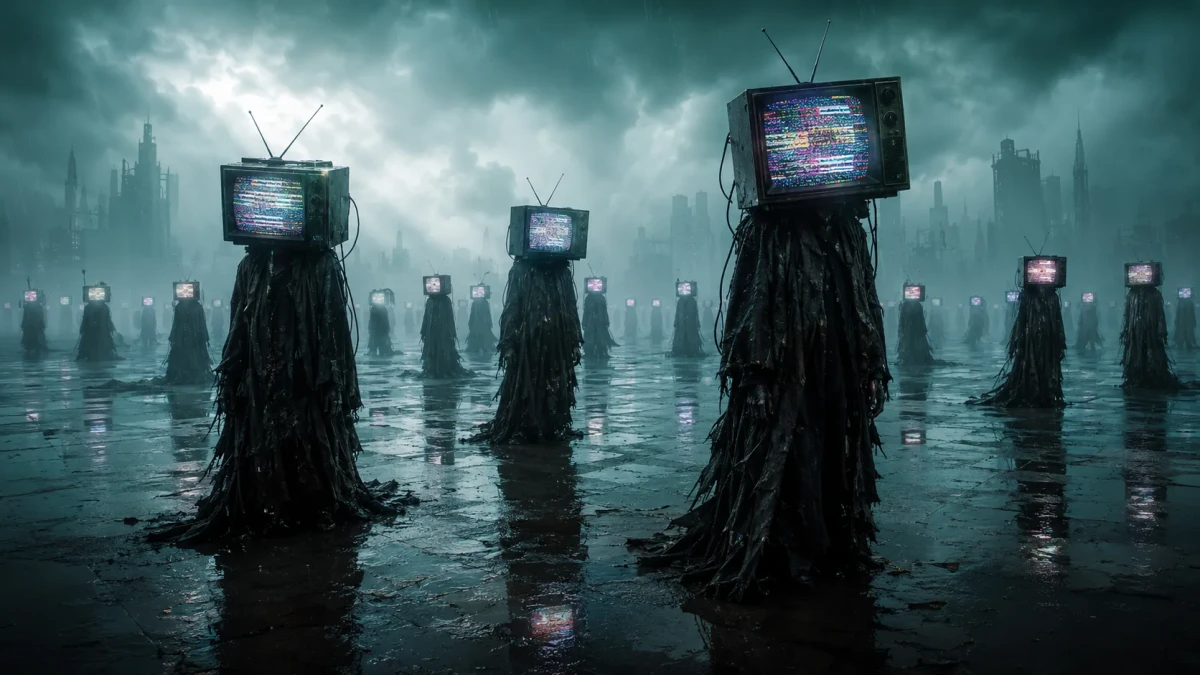
Cinematic wide shot of a surreal dystopian world. Numerous tall, cloaked figures walk slowly across a vast, wet, reflective concrete expanse that stretches into the distance. Each figure has its head replaced by an old vintage television set with antennas, the screens displaying bright, chaotic colorful static and distorted signals.

The figures move in loose, almost ritualistic formation, their dark cloaks dragging across the wet ground. In the foreground, several figures are sharply visible, while dozens more gradually fade and dissolve into a dense, thick teal fog that swallows the horizon. Glowing puddles on the ground reflect the flickering light from the television screens and the cold teal atmosphere.

The sky is heavy and overcast, with a sickly teal-blue hue. Moody, dramatic lighting with strong contrast between the bright, noisy television screens and the dark, wet environment. Heavy atmospheric perspective, subtle rain, and volumetric light rays cutting through the fog. Rich textures on the wet concrete, tattered cloaks, and old television casings.

A haunting, oppressive and hypnotic dystopian atmosphere — as if these figures are remnants of a civilization consumed by media and noise, endlessly wandering through a decaying world. Cinematic color grading, high detail, and a strong sense of scale and melancholy.
Guide & Practical Tips
How to use this prompt
This prompt is designed for GPT Image 2. Simply copy the entire prompt text into the AI image generator. The scene is a wide cinematic shot, so ensure the output format matches your intended use (e.g., 16:9 for cinematic stills, 9:16 for mobile backgrounds). The key visual elements are the vintage television heads with static screens, the wet reflective ground, and the thick teal fog. You can adjust the number of figures, the color of the static, or the intensity of the fog by modifying the corresponding descriptive phrases.
Best use cases
This prompt is ideal for creating:
- Concept art for dystopian or post-apocalyptic narratives.
- Album cover art for dark ambient or electronic music.
- Editorial illustrations for articles about media saturation, technology critique, or existential themes.
- Immersive backgrounds for game or film environments.
- Social media visuals with a strong, thought-provoking aesthetic.
What to adjust
- Number of figures: Change "Numerous tall, cloaked figures" to a specific count or use vague terms like "a crowd" or "a few."
- Static colors: Replace "colorful static" with specific hues like "neon blue static" or "monochrome flickering."
- Fog density: Modify "thick teal fog" to "thin mist" or "dense gray fog" for different moods.
- Lighting: Strengthen or soften the contrast by adjusting the description of the screens' brightness and the environment darkness.
- Weather: Add or remove rain by editing "subtle rain" to "heavy downpour" or "no rain."
- Aspect ratio: Specify your desired format in the prompt (e.g., "16:9 widescreen" or "4:5 portrait").
Common mistakes
- Overcrowding the scene: Too many figures may lose detail. Keep the foreground focused on a few distinct figures.
- Ignoring lighting balance: The bright TV screens need a dark environment to pop. Avoid making the background too bright.
- Unclear static: Use specific terms like "noisy static" or "glitching patterns" to ensure the model generates visible screen content.
- Inconsistent style: Stick to cinematic language throughout; avoid mixing with cartoonish or illustrative terms.
Variations
- Minimalist version: Reduce figures to two, use black-and-white static, and dim the fog for a more intimate, eerie scene.
- Color shift version: Replace teal with crimson or amber fog for a more aggressive or surreal mood.
- Daytime version: Set the scene under a pale sun with light mist and softer reflections for a melancholic but less oppressive feel.
- Close-up version: Focus on a single figure, emphasizing the TV head details, static, and wet fabric texture.
- Animated version: For video generations, add "slow motion" or "animation" keywords to suggest movement of the figures and flickering screens.
You might also like
Cinematic Neo-Noir Motel Fire Prompt
Nano Banana
Bioluminescent Cyber-Ronin Rainstorm Prompt
GPT Image 2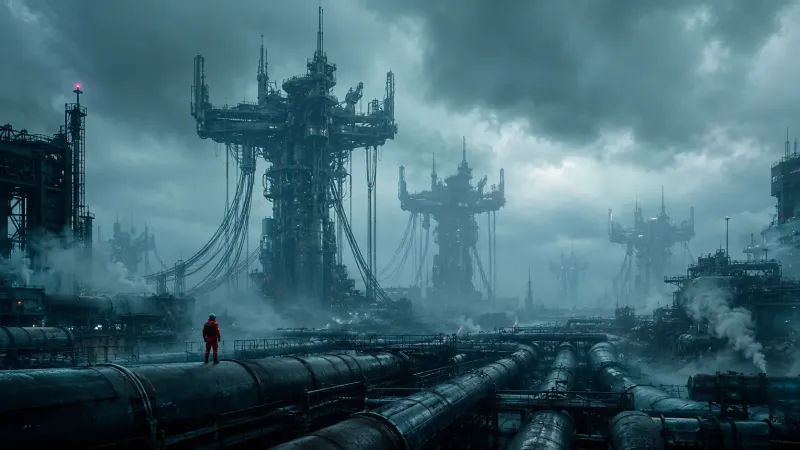
Colossal Mechanical Towers in Dystopian Scene
GPT Image 2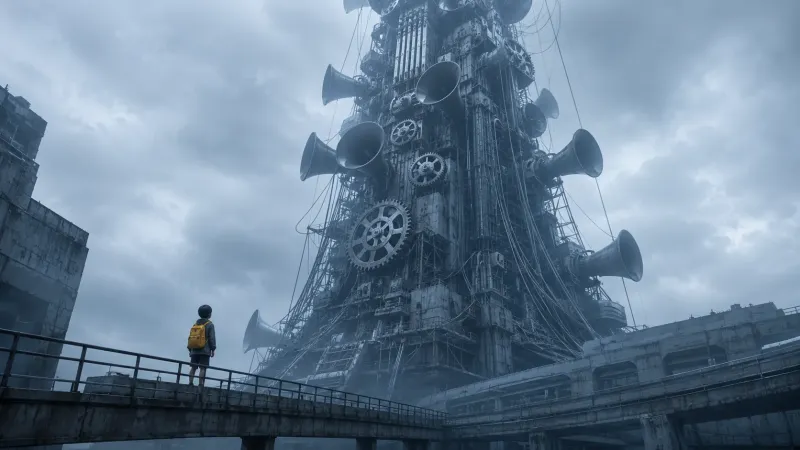
Colossal Mechanical Tower with Child – Cinematic Prompt
GPT Image 2
Dark Romantic Top-Down Portrait
Nano Banana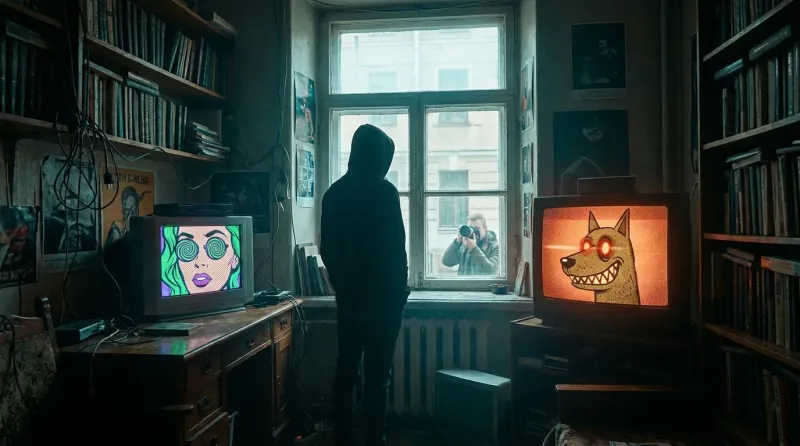
Vintage CRT TV Surreal Cinematic Prompt
Nano Banana
Surreal Black-and-White Cinematic Portrait – Birds from Void
GPT Image 2