Chiaroscuro Portrait with Amber Rim Light
A cinematic low-key portrait with warm amber key light, chiaroscuro shadows, and subtle film grain. Designed for image-to-image identity preservation.
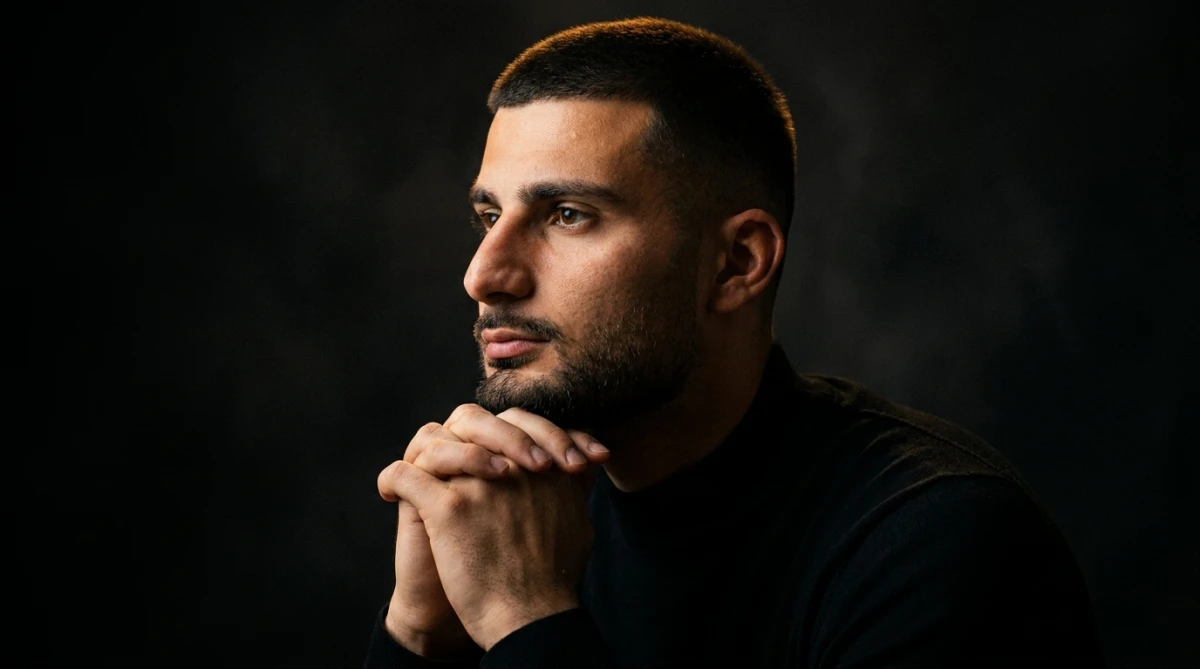


[IDENTITY & COMPOSITION LOCK]: Precisely map the target character's identity (bone structure, facial proportions, skin tone, hair) into the 4:5 vertical framing of the reference. Preserve the exact three-quarter side-profile pose, head turned frame-left, calm distant gaze. Hands are clasped seamlessly beneath the chin.
[SUBJECT & WARDROBE]: Dressed in a dark, minimalist black long-sleeve mock neck or turtleneck. The clothing silhouette blends effortlessly into the surrounding shadows, emphasizing only the face and hands.
[CINEMATOGRAPHY & LIGHTING]: Shot on an 85mm portrait lens, shallow depth of field. Masterful low-key chiaroscuro lighting. A strong, warm amber/golden light strikes from the upper frame-left, perfectly sculpting the left-facing forehead, nose bridge, lips, and hands, while casting a subtle golden rim light on the hair. The opposite side of the face falls into a rich, deep, detailed shadow with a gradual, organic transition.
[ENVIRONMENT & FINISH]: The background is entirely dark, soft, and indistinct—a textured, smoky black void. Photorealistic cinematic portrait photography, visible natural pores, accurate anatomical hand structure, intimate mood, subtle editorial film grain.
Guide & Practical Tips
How to use this prompt
This prompt is optimized for the Nano Banana model in an image-to-image workflow. To achieve the best result, start with a reference image of your target character — ideally a front or three-quarter portrait with clear facial structure. Place the reference as the first image input, then paste the entire prompt into the text field. The prompt locks the character's identity, pose (three-quarter turned frame-left, hands clasped under chin), and the specific low-key lighting setup.
For Nano Banana, the structured format with bracketed sections works natively. Do not remove the [IDENTITY & COMPOSITION LOCK] section — it ensures the model respects the reference. Adjust the 'strength' parameter if the output deviates too much from the reference (lower strength for closer likeness, higher for more creative interpretation).
Best use cases
- Editorial portraits for fashion or lifestyle magazines
- Character consistency across a series of images (e.g., for a graphic novel or game concept)
- Moody social media visuals for Instagram or Pinterest
- Cinematic stills with a classic film noir or art-house feel
- Profile images that require a dramatic, high-end aesthetic
Common mistakes
- Using a reference with mismatched lighting. The prompt expects a three-quarter pose with light from upper left. If your reference has flat or frontal lighting, the result may look unnatural.
- Not preserving the pose. The hands-clasped pose is crucial for the composition. If the reference has hands elsewhere, the model may blur or distort them.
- Over-editing skin. The prompt includes ‘visible natural pores’ and ‘accurate anatomical hand structure’. Avoid heavy denoising or smoothing in post-processing.
- Changing the background too much. The background is deliberately a dark, smoky void. Adding bright elements or textures can break the low-key mood.
Variations
- Color shift: Replace
amber/golden lightwithcool blue moonlightfor a colder, more melancholic mood. - Film grain: Remove
subtle editorial film grainfor a cleaner, commercial look, or increase it for a vintage 1970s aesthetic. - Background texture: Change the ‘smoky black void’ to ‘dark velvet curtain’ or ‘oil-slicked water’ for subtle environmental context.
- Hair and wardrobe: Modify the turtleneck to a collared shirt or open jacket, or change hair color while keeping the lighting and pose intact.
- Aspect ratio: The prompt uses 4:5 vertical. For 16:9 widescreen, adjust composition to a medium shot, but keep the lighting and identity lock sections unchanged.
You might also like
Underground Bare-Knuckle Fight AI Prompt
Nano Banana
Moody Elevator Standoff – Cinematic Portrait
Nano Banana
Sultry 1970s Pool Hall Film Still
GPT Image 2
Dark Romantic Top-Down Portrait
Nano Banana
Fierce Cossack-Viking Chief in Storm
GPT Image 2
Beksiński Surreal Seascape AI Prompt
GPT Image 2
Cyber-Baroque Ethereal Portrait with Crystal Veil
Nano Banana