Lone Rider in Amber Apocalypse
A ready-to-use AI image prompt for creating a cinematic shot of a lone motorcyclist riding into a hazy, monochromatic amber apocalypse with a glowing red taillight and dramatic telephoto compression. Perfect for dystopian visual storytelling.
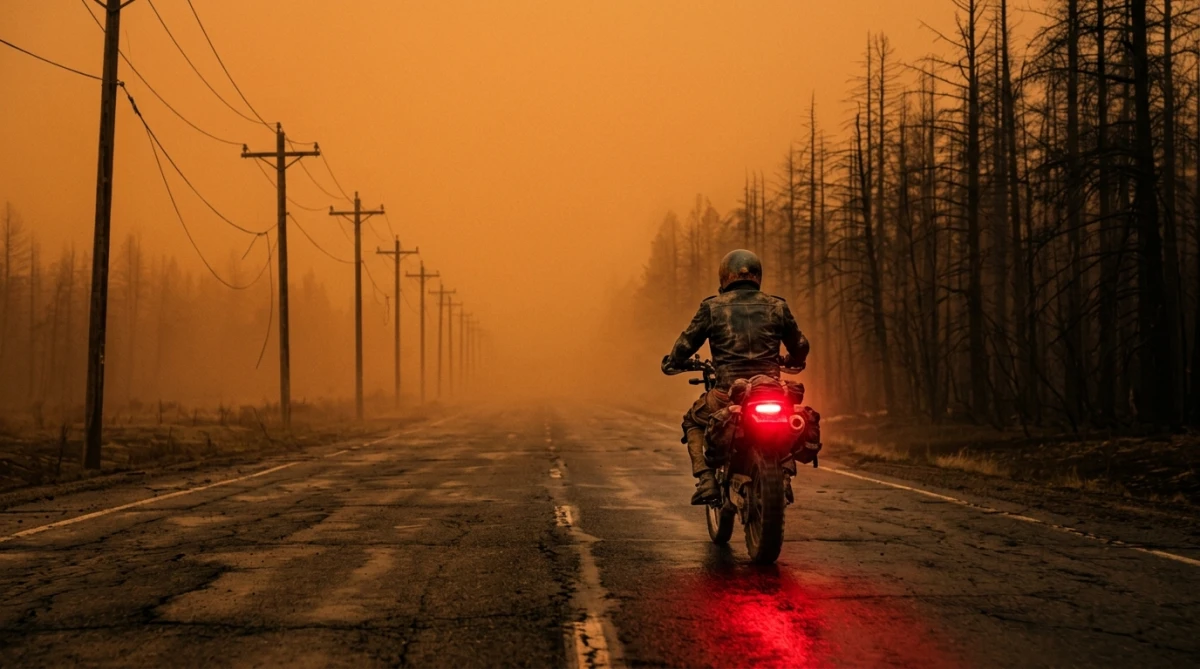
[SUBJECT & ACTION]: A wide cinematic shot of a lone survivalist motorcyclist riding away into the distance on an empty, cracked asphalt highway. The rider wears a weathered black leather jacket with dust caught in the seams, and a dark helmet reflecting the ambient orange haze.
[COMPOSITION & GEOMETRY]: Receding weathered wooden telephone poles with loose wires stretch into the distance on the left side of the frame, creating perfect leading lines. On the right side, giant, ominous, skeletal silhouettes of dead pine trees loom like silent giants.
[LIGHTING & OPTICS]: Extreme telephoto lens compression, shot on 135mm anamorphic lens at f/2.8, Arri Alexa LF. The atmosphere is extremely hazy, creating a dramatic vanishing point where the road dissolves into thick fog. The sole vibrant light source is the intense, glowing ruby-red neon taillight of the motorcycle, casting a long bloody reflection on the cracked wet road surface.
[COLOR & ATMOSPHERE]: Oppressive, monochromatic amber color palette. Heavy, thick volumetric orange smog and toxic dust motes float in the air, catching the faint, diffused light from an obscured sun. Cinematic film grain, subtle halation on the red light, 1/4 Black Pro-Mist filter effect, moody dystopian post-apocalyptic atmosphere --ar 21:9
Guide & Practical Tips
How to use this prompt
This prompt is designed for Nano Banana and uses a structured format with clear sections. Simply copy the entire prompt body and paste it into Nano Banana's image generator. The model will interpret the Subject & Action, Composition & Geometry, Lighting & Optics, Color & Atmosphere sections to produce a cohesive cinematic frame. For best results, ensure the aspect ratio is set to 21:9 (ultrawide) as specified.
Best use cases
This prompt excels for dystopian storytelling, concept art, album covers, game backdrops, or cinematic mood boards. The strong leading lines and oppressive atmosphere make it ideal for creating a sense of isolation and hopelessness. Use it for social media visuals in a post-apocalyptic campaign or as a hero image for a sci-fi blog.
What to adjust
- Subject: Replace the motorcyclist with a lone wanderer, a vehicle, or an animal for variation.
- Background: Change the dead pine trees to ruins, desert dunes, or abandoned city skylines.
- Lighting: Adjust the taillight color to blue or white, or remove it for a purely monochrome scene.
- Atmosphere: Increase or decrease the fog density using terms like "light haze" or "dense smog".
- Color palette: Shift from amber to a cold blue or green for a different mood.
- Lens: Experiment with wider focal lengths for less compression or a documentary feel.
Common mistakes
- Ignoring the aspect ratio: Without
--ar 21:9, the image may not have the intended cinematic width. - Overloading the scene: Adding too many details (e.g., multiple riders, animals) can clutter the composition.
- Conflicting lighting: Ensure the single red taillight is the main light source; adding other bright lights may break the mood.
- Forgetting film grain and halation: These subtle textures are key to the cinematic look; don't omit them.
Variations
- Nocturnal version: Replace amber fog with deep blue moonlight and cold reflections.
- Bleak winter version: Swap the amber palette for muted whites and grays, with snow on the road.
- Close-up variant: Change the shot to a medium close-up of the rider's helmet, focusing on the visor reflection.
- Surreal version: Add floating particles or a glowing sky phenomenon like a ring eclipse.
- Urban dystopia: Instead of a highway, place the rider in an abandoned city street with neon signs.
You might also like

Laika-Style Stop-Motion Scrapyard Diorama
Nano Banana
Neural Underground: Cinematic Data Broker
Nano Banana
Post-Apocalyptic Neon Hideout Cinematic Prompt
GPT Image 2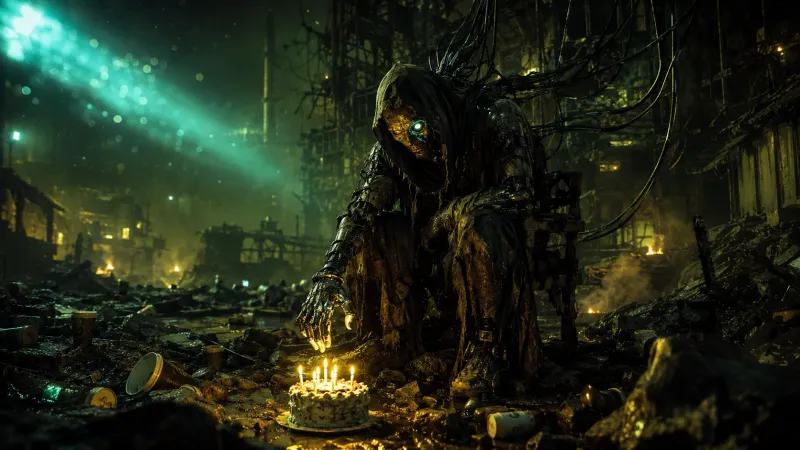
Android's Post-Apocalyptic Birthday Ritual
GPT Image 2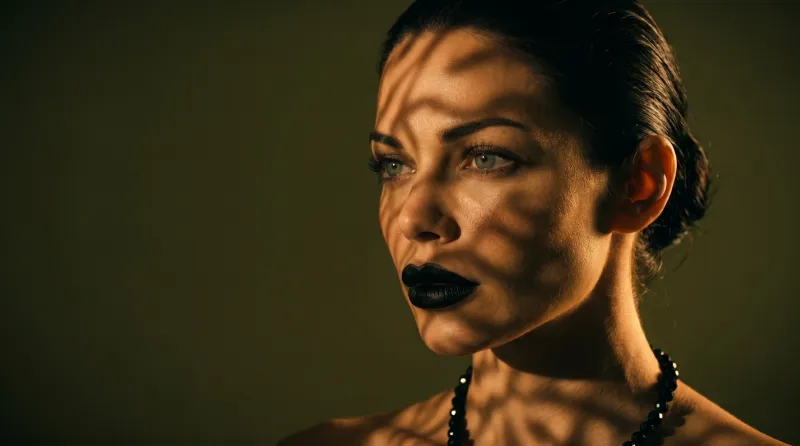 Premium
Neo-Noir Amber Portrait: Cinematic Close-Up
Nano Banana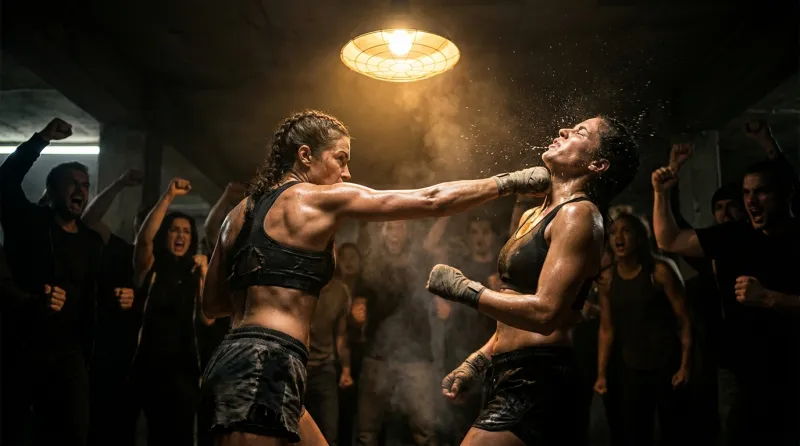
Underground Bare-Knuckle Fight AI Prompt
Nano Banana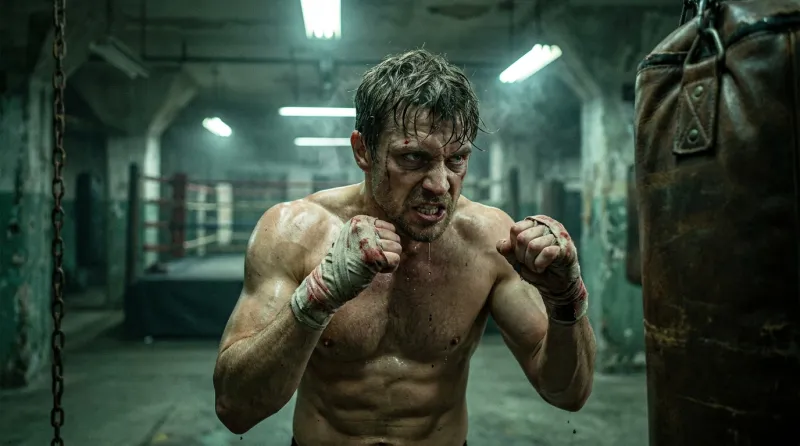
Raw Boxing Portrait – Gritty Cinematic AI Prompt
Nano Banana